Translate Video/Audio from English to German and German to English

Tutorials & Guides
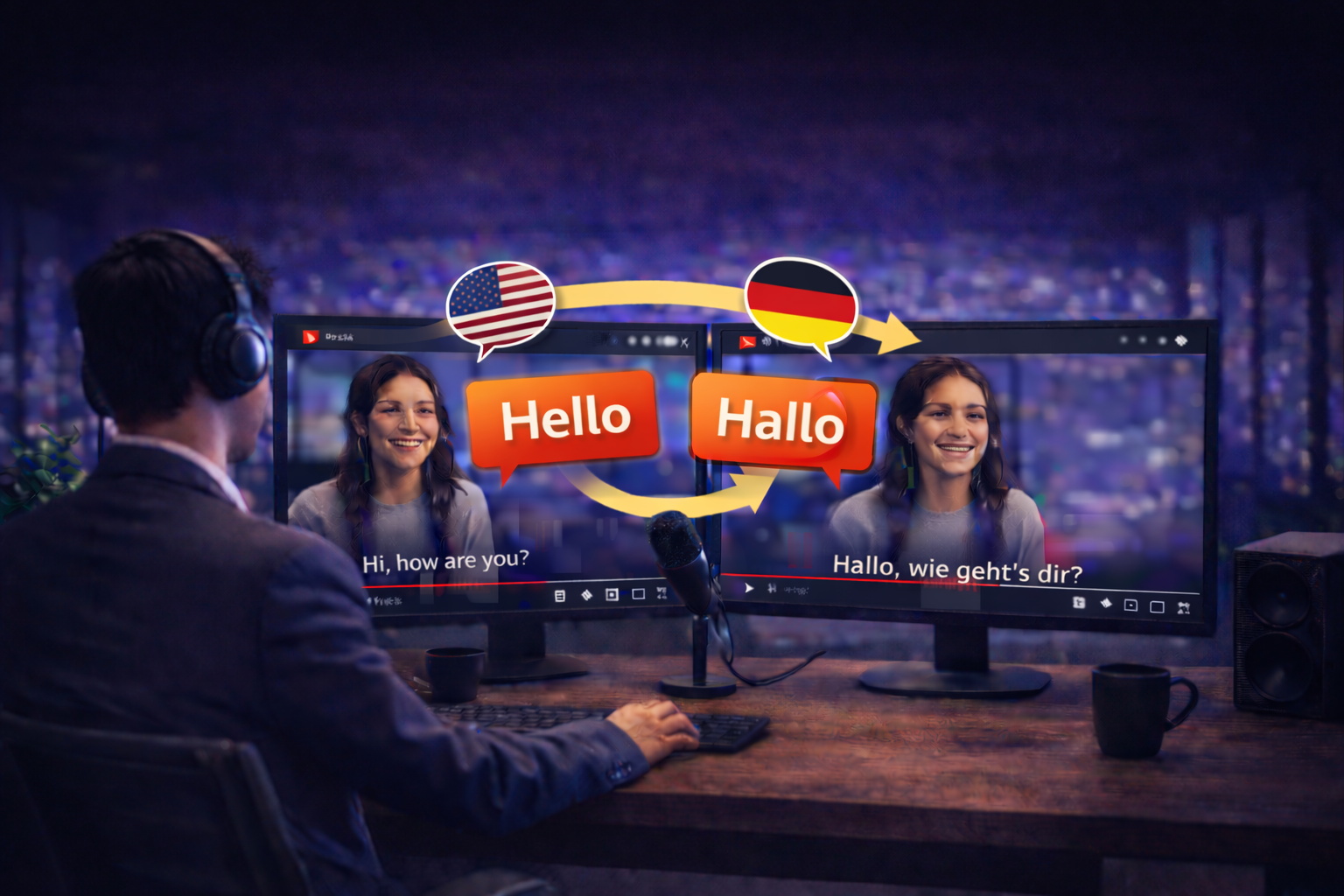

If you translate content between English and German, you are working with one of the most common language pairs in business, education, and online media. That is great for reach, but it also means viewers notice quality fast. A literal translation can feel “off” even when every word is technically correct, especially in marketing, training, and YouTube style content where tone matters as much as meaning.
German tends to be precise and can form long compound nouns. English is often more compact and direct. That difference can affect pacing in video and the feel of your voice-over. It is also worth deciding early whether your German should sound more formal (Sie) or more casual (du). This is why it helps to translate first, then quickly fine-tune the lines that carry the most weight, like your hook and CTA.
The best workflow is not “translate and hope.” It is: translate, preview, then quickly fine-tune the few lines that carry the most weight, like your hook, CTA, product claims, and any idioms. With CHAMELAION, you can translate English to German or German to English for both video and audio easily, preview the result, and if not yet perfect: adjust wording, timing, and delivery in the Dubbing Studio.
Go to app.chamelaion.com and create your account, or log into an existing one. If you are new, you can sign up instantly with Google or use your email.
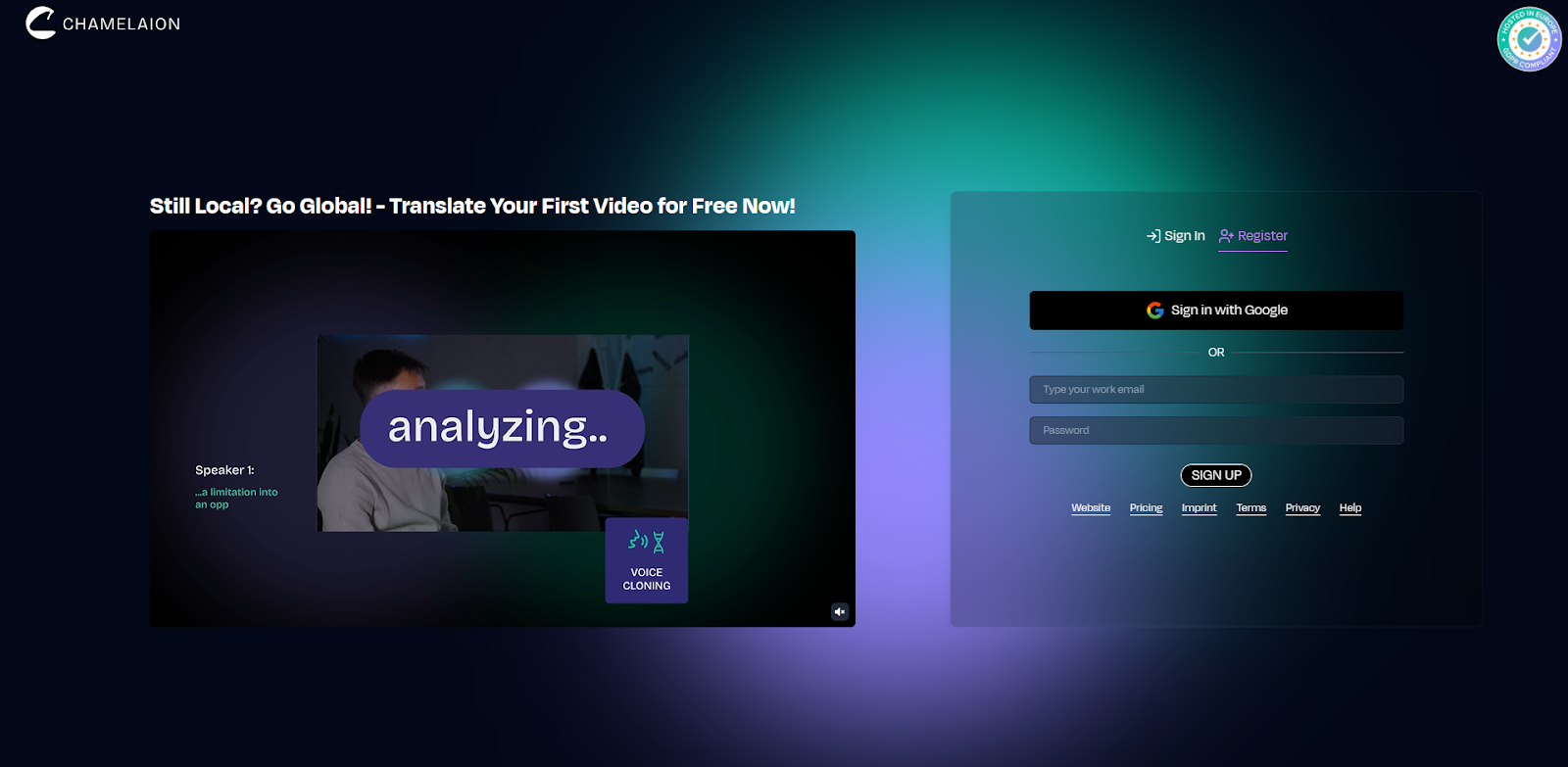
After signing up, you will be asked to verify your email and set your display name.
Upload your video (MP4, MOV) or audio (MP3, WAV, M4A). For best results, use the cleanest source you have.
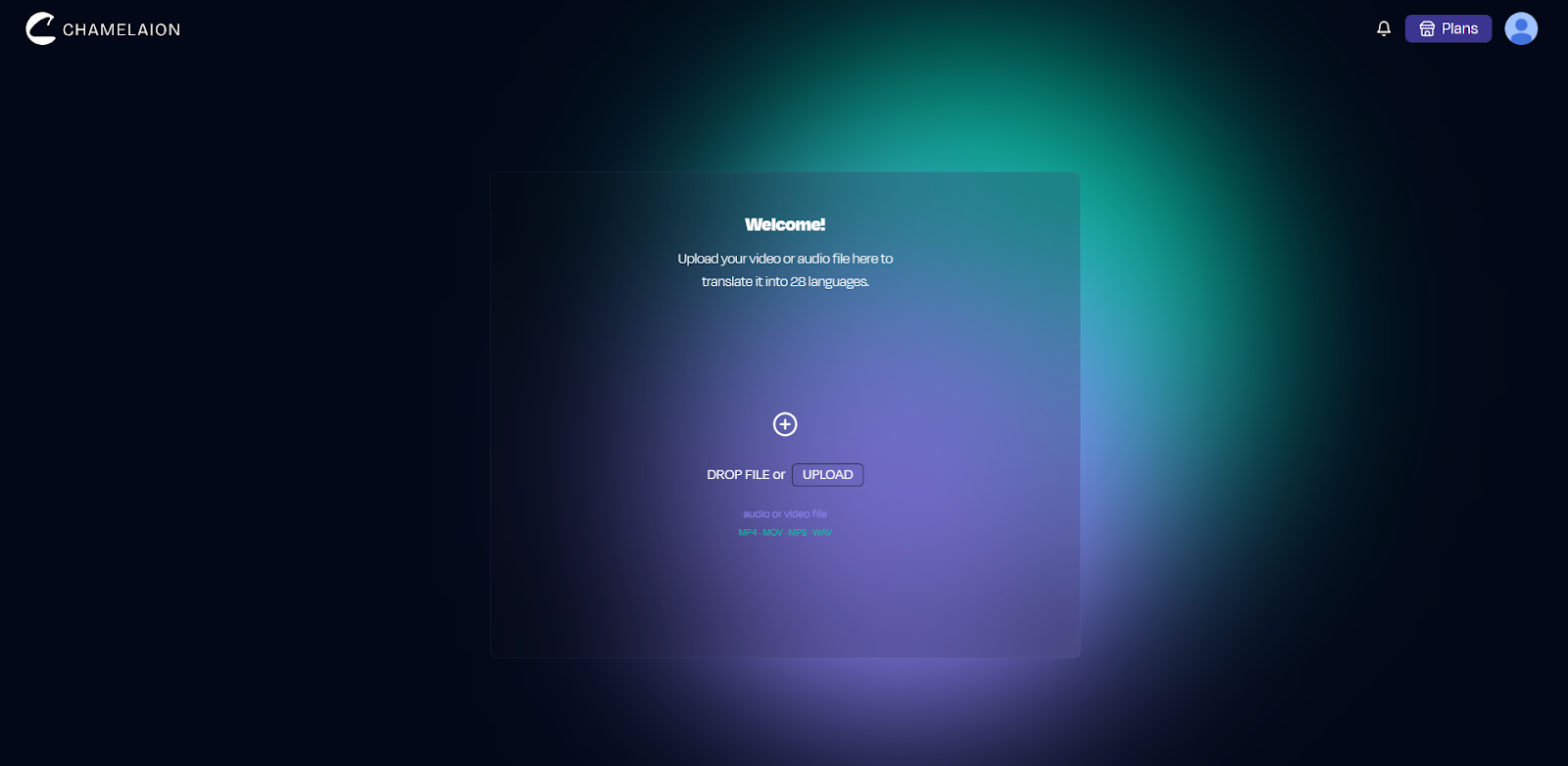
Longer videos are no problem. They just take a few extra minutes to process.
CHAMELAION will auto-detect the spoken language. Confirm it before translating.
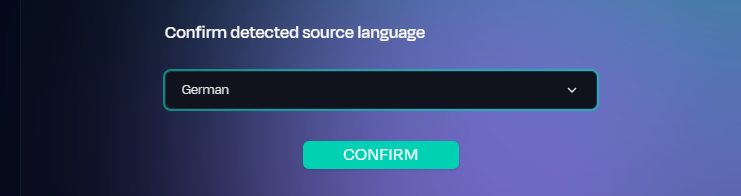
This matters because transcription quality drives translation quality.
Pick the direction you need:
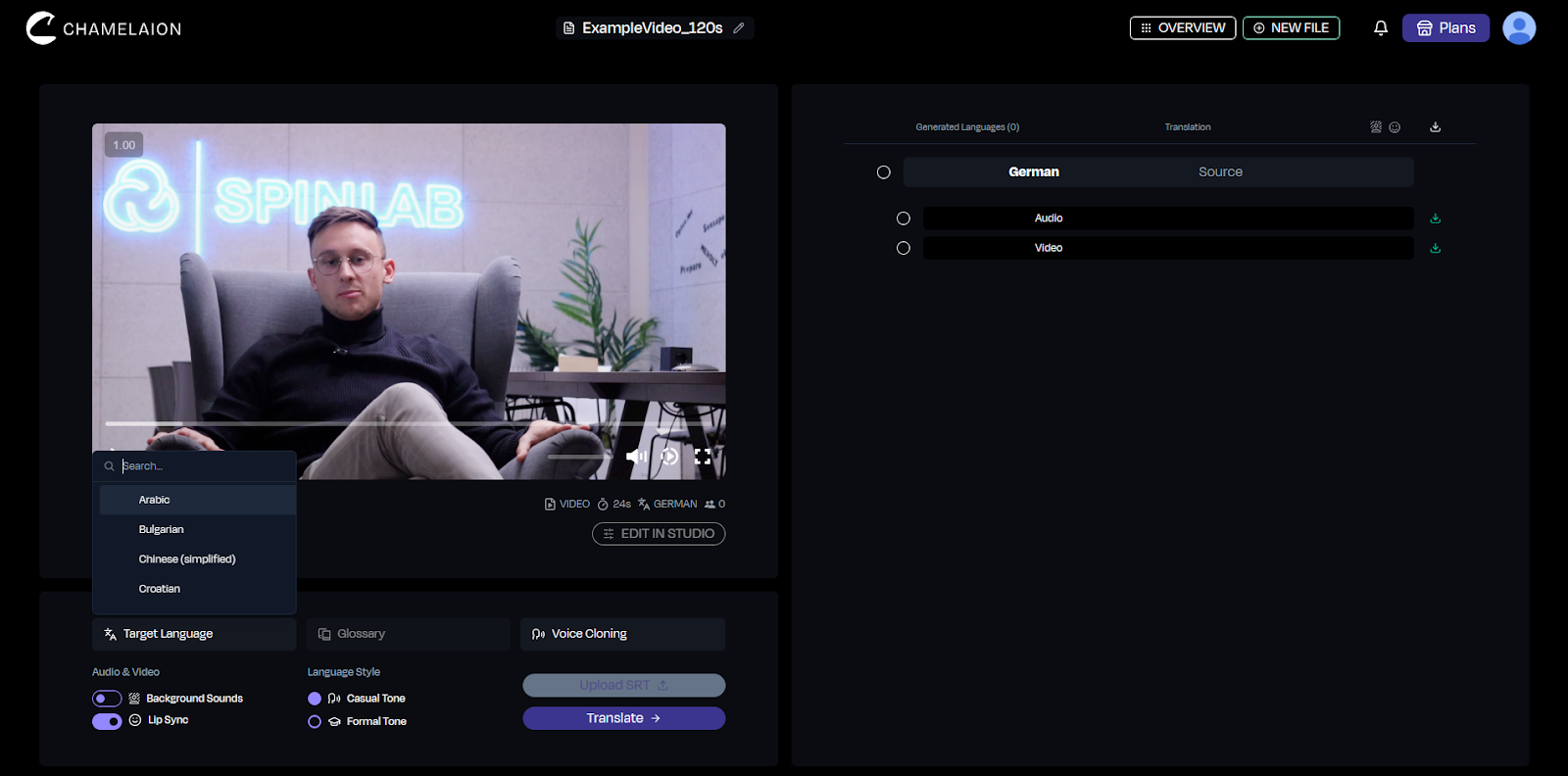
If you are publishing in multiple markets, you can also generate multiple target versions.
Before you click Translate, consider these (they are optional):
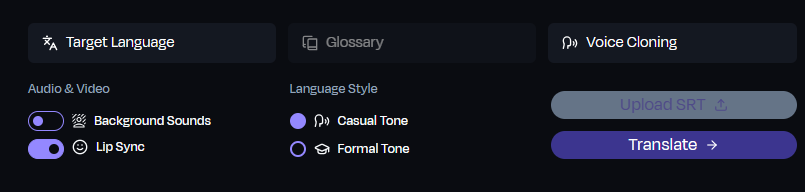
Click Translate, then preview the result when processing is complete.
If anything sounds slightly translated, open the Dubbing Studio and polish:
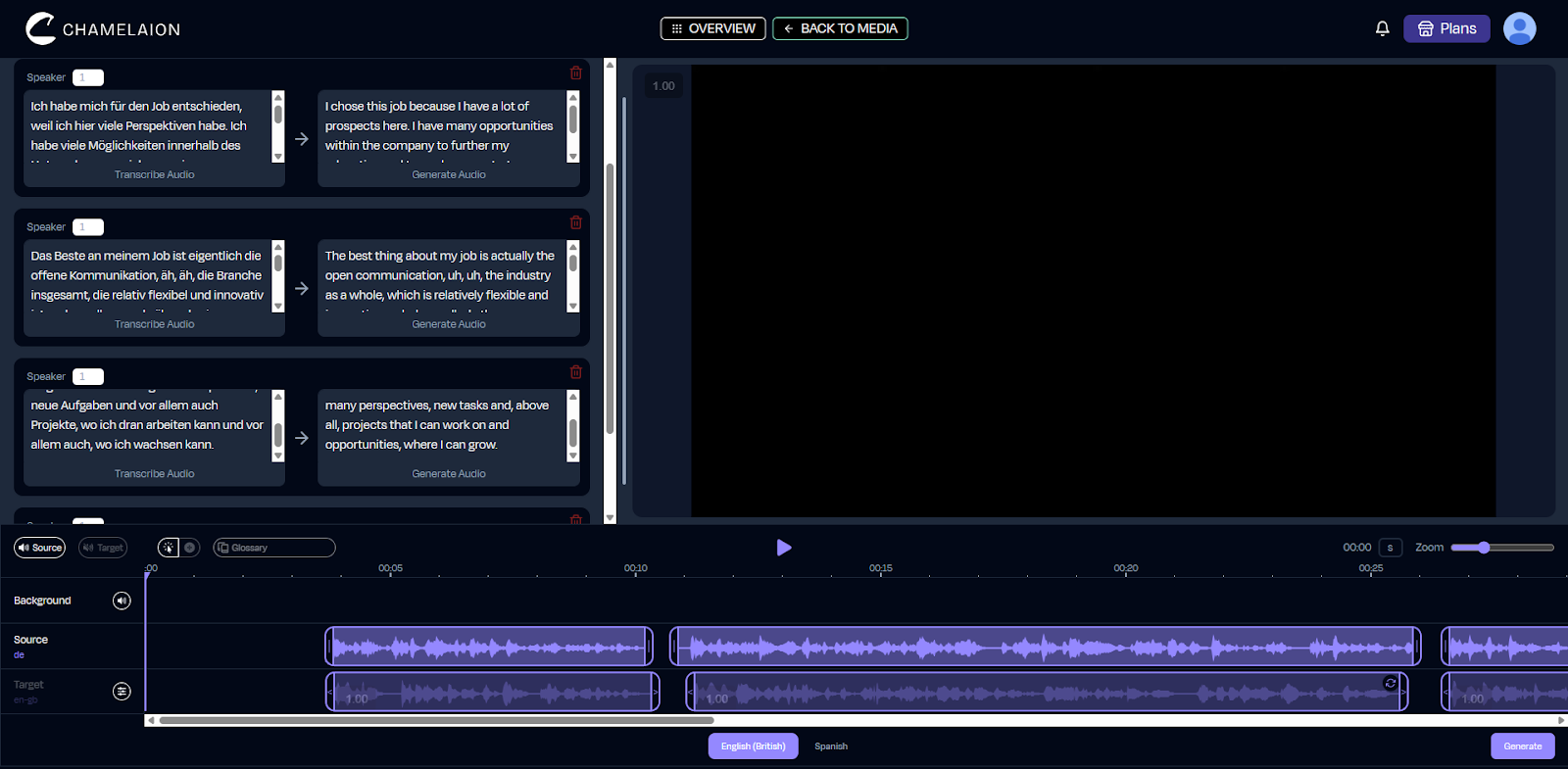
For a full feature walkthrough, the CHAMELAION Help Center is the best place to go.
Pitfall 1: du vs Sie changes the tone
English “you” is neutral. German often forces a choice.
Pick a tone on purpose and keep it consistent across the whole video, especially in your hook and CTA.
Pitfall 2: Compound nouns and length can affect timing
German can create long compound words (for example “Kundenzufriedenheit” or “Datenschutzeinstellungen”). If your translated line feels too dense or rushed, shorten the sentence or choose a simpler phrasing in the Dubbing Studio.
Pitfall 3: Literal translations and sentence structure
English phrases often need restructuring to sound natural in German, especially idioms, marketing hooks, and CTAs. A quick Dubbing Studio pass pays off: fix the few phrases that trigger “this is translated” vibes.
If you are translating audio (not video), your biggest levers are clarity and consistency:
To translate English to German or German to English with CHAMELAION:
Ready to create a German version of an English video, or an English version of a German video?
Start your first translation in the CHAMELAION Platform
Want to learn more about CHAMELAION first? Visit our Website
More in the CHAMELAION Blog
Should I use du or Sie in my German version?
Match your audience and channel. du is common for creators and modern brand content. Sie is often better for formal, corporate, or highly professional contexts. Pick one and stay consistent.
Why does my English → German version feel tighter on timing?
German can be longer and more precise than English, so timing can tighten in video. Preview the result, then shorten lines or adjust pacing in the Dubbing Studio if the delivery feels rushed.
Can I keep the original music and ambience?
Yes. Enable Background Sounds to keep music and ambience mixed into the export.
Is it really free?
Yes! CHAMELAION offers a free Starter option. Free exports may include a small “Translated with CHAMELAION” watermark depending on your plan. If you are translating lots of content or many languages, you will typically want to upgrade your CHAMELAION plan.
Learn more about our Plans on our Pricing Page.
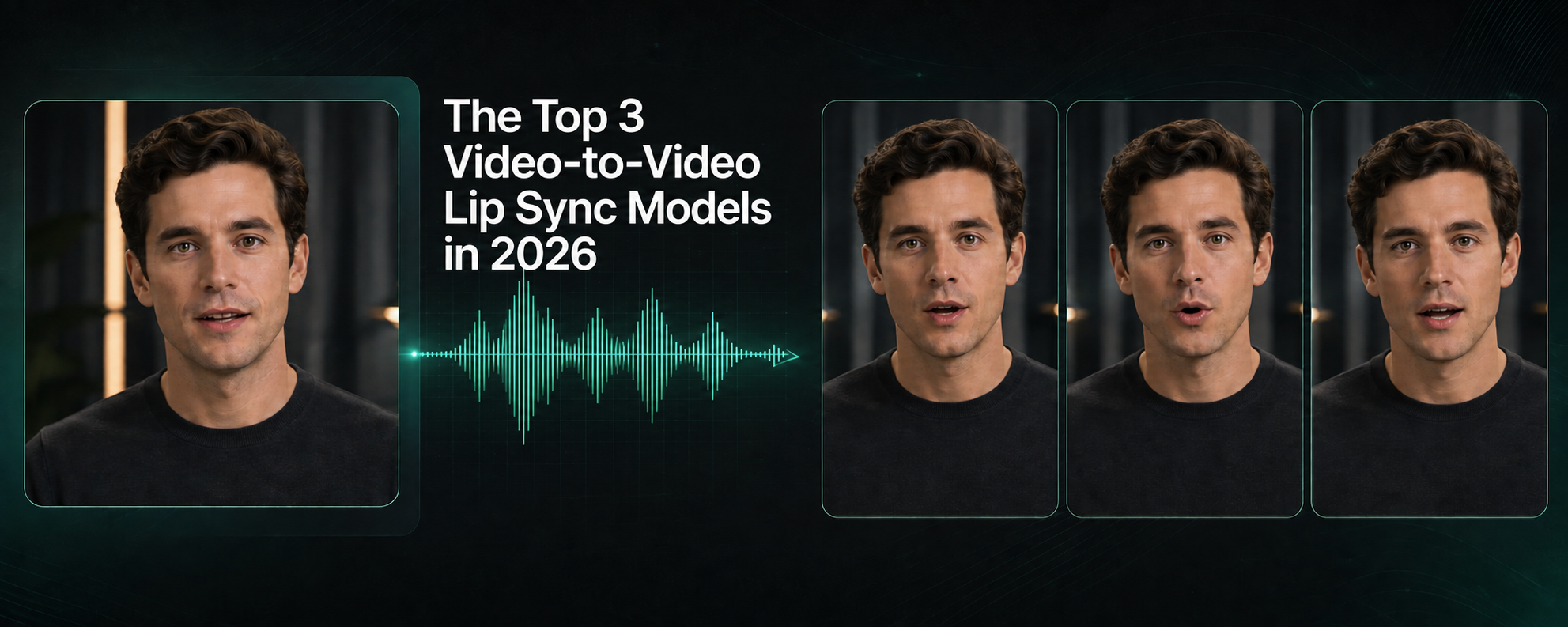
Compare Kling, CHAMELAION and Sync 3 with video examples, per-minute pricing, features, and access through platforms, APIs and SDKs.

Translate Hindi and Portuguese video or audio with CHAMELAION. Upload, choose languages, click Translate, then preview and export in minutes.


© 2025 CHAMELAION GmbH