The Top 3 Video-to-Video Lip Sync Models in 2026

Comparisons
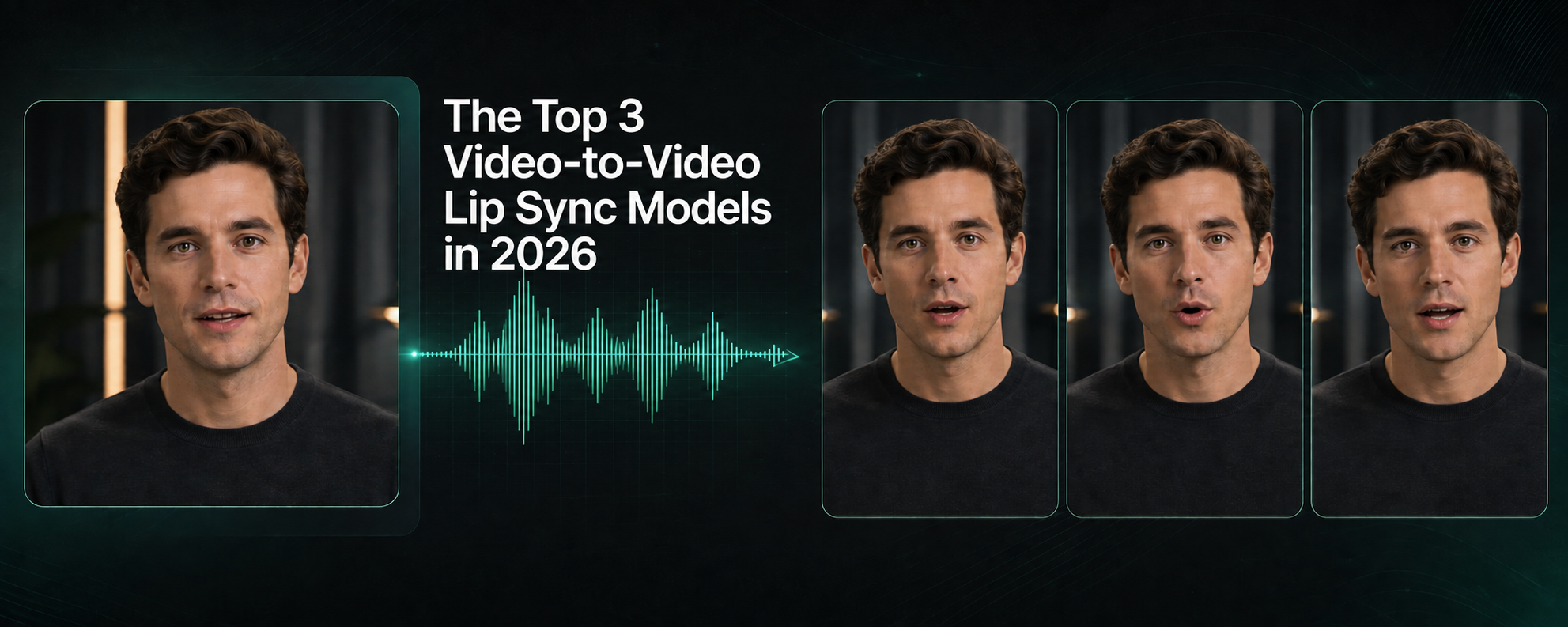

Want to translate a video, change an advertising message or personalize an existing clip? A video-to-video lip sync model edits the lip movements of a person visible in the video so that they appear to be speaking the words in the new audio track.
When choosing a model, consider image quality, natural lip movements and preservation of the speaker’s individual speaking style. For videos with multiple speakers, it also matters whether the model automatically identifies who is speaking and adjusts the right person’s lip movements. Cost per video minute is another factor. Here are three options for 2026: Kling LipSync, CHAMELAION LipSync and Sync 3 from Sync Labs.
Our editorial selection covers different requirements and price points. Each model section includes features, access details, per-minute pricing and its example video. The conclusion summarizes the key differences in one table.
For the example comparison, we use the same source video and the same new audio track for all three models. The original provides a reference for the face, expressions and speaking style. The three outputs let you assess how the new language or dialogue is represented visually.
As you watch, look at how speech matches the mouth movements, the visible detail and the naturalness compared with the original. One clip shows the behavior in that scene; testing your own material can help you make a decision for your workflow.
Video-to-video lip sync combines existing footage with a new audio track. In video translation, it can provide the final visual step after the translated speech has been recorded or generated.
Four questions help narrow down the choice:
Resolution matters too. Alongside the video’s dimensions, examine the actual detail in the edited face region. Full HD is the intended delivery format for many marketing, training and localization projects; higher resolution can matter for a 4K production.
Kling LipSync is an option for teams adding new audio to existing clips while keeping processing costs low. We are referring to Kling AI’s dedicated LipSync service. The model operates at a maximum resolution of 720p HD.
The direct Kling LipSync documentation currently specifies one person per request. That matters when planning interviews or scenes with multiple visible people. Kling LipSync documentation
You can try Kling LipSync with a video and audio file in the fal playground. Other integration routes include the direct Kling API and KlingAI Lip-Sync on Runware.
For Python or JavaScript/TypeScript applications, fal provides suitable client libraries. These SDKs belong to the API provider and give you access to Kling through that service. A fixed free LipSync allowance has not been confirmed for the Kling access routes listed here.
Clip length limits vary by access route. The direct Kling API’s video requirements allow 2–60-second inputs. The fal endpoint documents 2–10-second source clips.
The direct API list price is US$0.84 per minute. Providers such as fal and Runware may charge their own rates. Kling pricing
Kling output using the shared target audio.
CHAMELAION LipSync combines 1080p Full HD with multi-speaker support, built-in active speaker detection and preservation of the original speaking style. Our proprietary model is designed to adapt the new mouth movements to the person’s individual way of speaking.
Active speaker detection identifies who is speaking in scenes with multiple people. This supports workflows with speaker changes where teams want to minimize manual assignment.
We position CHAMELAION between low-cost entry options and premium 4K services: professional Full HD output with capabilities for demanding video workflows and predictable costs across many language versions or variations.
CHAMELAION LipSync is available as a standalone service on the platform. You can process an existing video with your own audio track independently of a complete translation project. The free trial includes 2 minutes of LipSync at app.chamelaion.com.
For integration into your own products, an API and Python and TypeScript/Node.js SDKs are available. The API documentation covers getting started, authentication and submitting video and audio through URLs or uploads. The quickstart walks through the process from submitting a job to retrieving the result.
This is useful for dubbing platforms, video editors, advertising automation and personalized video. The API fits into an existing production pipeline, while the platform provides a way to get started without development work.
CHAMELAION LipSync costs €1.00–€1.50 per minute, depending on the plan. Pricing
CHAMELAION output using the shared target audio.
Sync 3 targets productions with demanding resolution and facial-detail requirements. Sync Labs advertises 4K output, preservation of speaking style and emotion, and support for challenging camera angles and partially obscured faces. These capabilities are particularly relevant to close-ups and high-end production. Sync 3 model overview
Active speaker detection is also available. Access to features also depends on the subscription plan. Model capabilities
You can use the model in Sync Studio or integrate it through the API. Sync Labs provides official SDKs for Python and TypeScript/JavaScript, with packages named syncsdk and @sync.so/sdk. SDK documentation
The free plan currently includes one Sync 3 generation per month, up to 15 seconds long, within the overall free allowance. No credit card is required. Free outputs include a watermark. Sync free trial
At 25 frames per second, Sync 3 costs approximately US$6.40–US$8.00 per minute, depending on the plan, plus the monthly subscription fee. Sync pricing
Sync 3 output using the shared target audio.
CHAMELAION fills the gap between affordable 720p lip sync models and premium 4K solutions: professional Full HD output, capabilities for videos with multiple speakers, and economics that remain viable at higher volumes.
As of September 6, 2026. Usage rates in original currencies: Kling via the direct API, face detection extra; CHAMELAION varies by plan and excludes VAT; Sync 3 at 25 fps, varies by plan, subscription fee extra.
Kling’s referenced documentation does not list active speaker detection or speaking style preservation as dedicated capabilities. Sync offers active speaker detection on the Creator plan and above.
For many localization, marketing and training projects, 1080p Full HD is the intended delivery format. Beyond resolution, it matters whether the model automatically identifies the current speaker and preserves their individual speaking style. CHAMELAION is designed around that combination.
Kling is an option for low usage costs and clips with one visible speaker. CHAMELAION targets professional Full HD projects with automatic speaker detection and substantial processing volumes. Sync 3 is particularly relevant when requirements for 4K and challenging shots justify the higher price.
Upload your video and new audio track to see how CHAMELAION handles mouth movements and speaking style in your footage. You can try the first 2 minutes for free.
👉Try CHAMELAION LipSync for free
Building lip sync into a product? Visit the API documentation for API and SDK details. Explore our video and audio localization services at chamelaion.com.
It edits existing footage so the mouth movements match a new audio track. Applications include video translation, dubbing, dialogue replacement and personalized video.
CHAMELAION offers a 2-minute free LipSync trial on its platform. Sync currently offers one free Sync 3 generation per month, up to 15 seconds long. Trial access for Kling depends on the provider.
CHAMELAION and Sync Labs offer APIs and Python and TypeScript SDKs. Kling LipSync is available through Kling’s direct API and providers such as fal and Runware, whose client libraries support integration.
That depends on the delivery format. For a Full HD release, 1080p may be appropriate. For 4K production or enlarged faces, compare the visible detail at your intended viewing size.

Translate Hindi and Portuguese video or audio with CHAMELAION. Upload, choose languages, click Translate, then preview and export in minutes.

Translate Spanish and Arabic video or audio with CHAMELAION. Upload, choose languages, click Translate, then preview and export in minutes.


© 2025 CHAMELAION GmbH