AI Video Translation & GDPR: Data Privacy Checklist for Businesses (2026)

Ethics & Data Protection
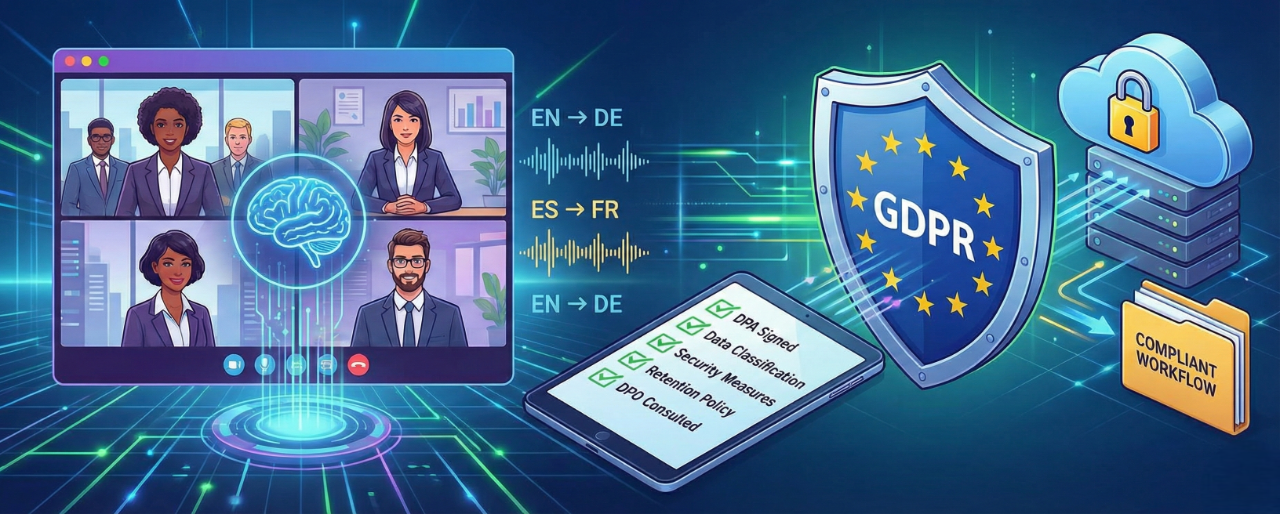

AI video translation (and AI dubbing) can help teams scale training, internal comms, and marketing across languages in days - not months. But there’s a catch: video and audio often contain personal data (faces, voices, names, context), which means GDPR obligations apply the moment you upload a file.
This guide breaks GDPR down into practical steps for AI video translation projects: what data is processed, where the typical risks are, what to check with vendors, and a concrete checklist you can hand to Legal, IT, or your Data Protection Officer (DPO).
Note: This article is for general information, not legal advice. For your specific situation, involve your DPO and/or legal counsel.
“Video translation” isn’t just text translation. A typical workflow processes:
That combination makes privacy diligence non-optional under GDPR because you are processing information relating to identifiable natural persons.
A simplified end-to-end flow looks like this:
1) Upload & storage
Your file lands in a platform storage layer. The key privacy questions here are:
2) Transcription (speech-to-text)
Speech becomes text. Now you have searchable personal data (names, identifiers, potentially sensitive context).
3) Translation
Text is translated. Risk often appears when translation is performed by third-party providers or subprocessors (you need transparency and contracts).
4) Voice generation / voice matching
Some systems preserve voice characteristics. If voice samples are used, your team should be clear on:
5) Video processing (e.g., lip-sync / timing)
Depending on the technique, frames may be analyzed or modified. That’s one more processing step to document.
6) Export, collaboration, sharing
Downloads, shared links, team permissions, and external reviewers are common “human” risk points:
Controller vs. processor (roles)
In most business use cases:
That relationship triggers a processor contract / DPA requirement (GDPR Art. 28).
Lawful basis (why you’re allowed to process)
For employee/internal videos, common lawful bases can include:
This is exactly where your DPO/legal team should give a “yes/no + conditions” decision (GDPR Art. 6).
Data minimization & purpose limitation
Only process what you actually need for the translation goal and don’t keep it longer “just in case.” These principles are core GDPR requirements.
Security of processing (technical + organizational measures)
GDPR expects “appropriate” measures (risk-based): access control, encryption, logging, etc. (GDPR Art. 32).
DPIA (Data Protection Impact Assessment)
If the processing is likely to result in high risk, you may need a DPIA (GDPR Art. 35). The EDPB guidance explains high-risk thinking and DPIA expectations.
When is a DPO mandatory in Germany?
Germany has a lower threshold than the GDPR baseline due to national law (BDSG). A DPO is generally required if you regularly employ at least 20 people who are permanently involved in automated processing of personal data (interpreted broadly in practice).
Even below that threshold, a DPO can be required if processing triggers a DPIA or involves certain commercial processing scenarios.
Why a DPO matters for AI dubbing projects
AI video translation often touches multiple risk factors at once (employee data, internal comms, international vendors, retention/deletion questions). A good DPO helps you:
CHAMELAION, for example, publicly lists an appointed external DPO and dedicated privacy contact channels in its Privacy Policy. This is the kind of operational clarity you should expect from any vendor you trust with video files or with any AI system handling customer data.
Use the questions below in procurement, IT security review, and legal checks. This mirrors what serious vendors themselves highlight as the key GDPR “must-haves” (DPA, TOMs, retention, subprocessors, SCCs where relevant).
A) Contracts & governance
B) Data usage boundaries
C) Security measures (TOMs)
Ask for documented measures (not marketing):
D) International transfers
E) Data subject rights support
Can the vendor support requests for:
This is the “do it tomorrow” step-by-step. If you implement only one part of this article, implement this.
Step 1: Classify the content before upload
Create a simple 3-level classification:
If it’s Red, pause and involve DPO/legal before processing.
Step 2: Define your lawful basis + document it
For each content class (Green/Yellow/Red), define:
Step 3: Lock down roles & access (who can upload what)
Step 4: Sign your DPA and validate subprocessors
Before production use:
Step 5: Set retention & deletion rules you can actually enforce
Define:
Step 6: Minimize data (simple habits that reduce risk)
Step 7: Keep an audit trail
Keep a lightweight record:
This is the kind of documentation that saves weeks of chaos later.
When you use CHAMELAION for AI video translation, you’ll still need to do your internal compliance work, but the vendor should support it with clear documentation and processes.
Based on CHAMELAION’s public documentation:
What to request internally (even if you use CHAMELAION):
GDPR compliance for AI video translation is not about stopping innovation, it’s about building a workflow that’s safe, documentable, and repeatable.
If you do the basics well, role clarity, DPA, security checks, retention rules, and DPO involvement. AI dubbing becomes a scalable localization channel you can confidently use across training, marketing, and internal communications.
If you want to test AI video translation in a business workflow (with clear documentation, privacy contacts, and a DPA process), start here:
Is AI video translation GDPR-compliant?
It can be, if you have a lawful basis, define controller/processor roles, sign a DPA (Art. 28), apply appropriate security measures (Art. 32), and manage retention/deletion properly.
Do we always need a Data Processing Agreement (DPA) with an AI dubbing provider?
If the provider processes personal data on your behalf (typical case), yes. That’s exactly what GDPR Art. 28 is for.
When do we need a DPIA for video translation?
A DPIA is required when processing is likely to result in high risk to individuals’ rights and freedoms. In practice, employee videos, large-scale processing, or sensitive contexts can trigger DPIA discussions. Your DPO should decide and document.
When is a DPO mandatory in Germany?
In Germany, a DPO is typically mandatory if a company regularly employs 20+ people who are constantly involved in automated processing of personal data (§38 BDSG). Even below that threshold, a DPO can be required under GDPR Art. 37 if the company’s core activities include large-scale monitoring or large-scale processing of sensitive data.
Tip: Don’t only check this for your own company, also check your AI provider. If they process customer personal data, they should have a clear DPO/privacy contact and be able to provide compliance documentation (e.g., DPA, TOM, subprocessors, retention).
What’s the biggest GDPR risk with non-EU AI video tools?
Common risks include unclear subprocessors, missing DPAs, uncertain retention/deletion, and international data transfers and storage without appropriate safeguards (e.g., SCCs).
Can we upload employee training videos?
Usually yes, but treat them as “personal data by default.” Put guardrails in place: approval flow, access control, retention rules, and (where needed) DPIA + DPO sign-off.
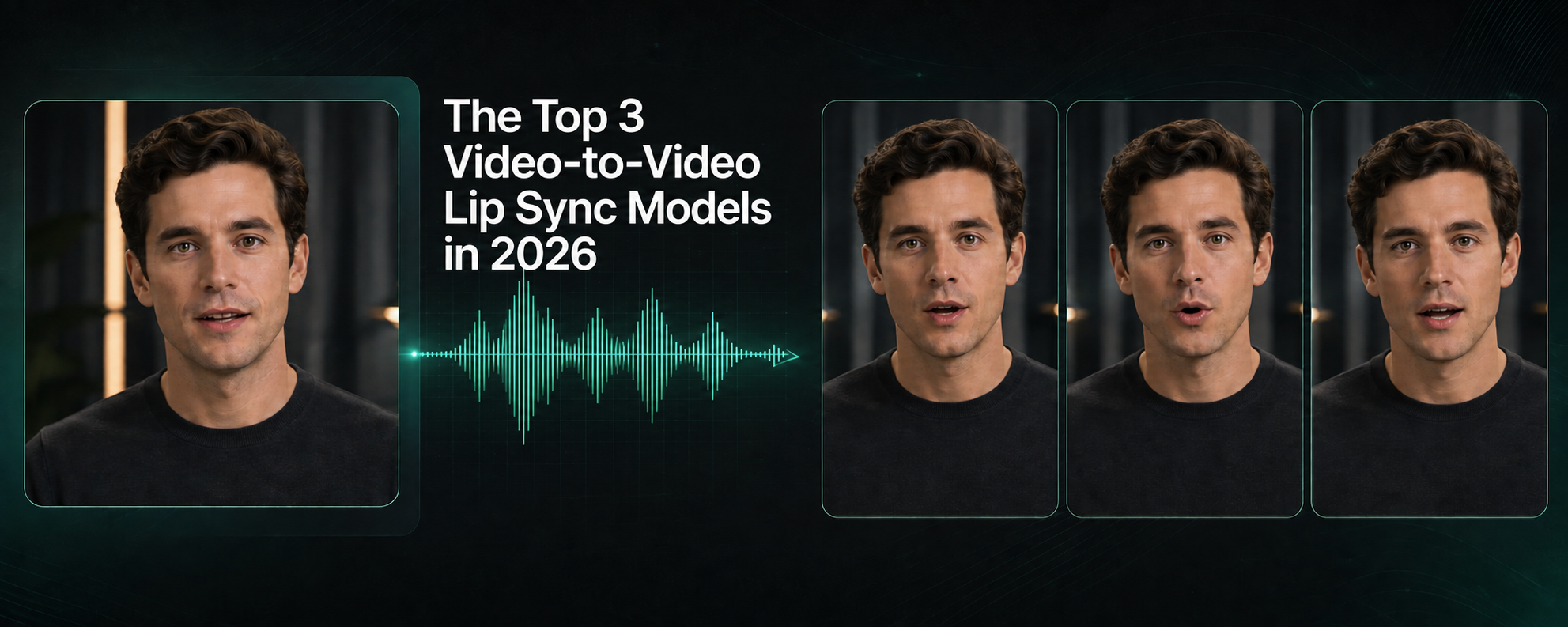
Compare Kling, CHAMELAION and Sync 3 with video examples, per-minute pricing, features, and access through platforms, APIs and SDKs.

Translate Hindi and Portuguese video or audio with CHAMELAION. Upload, choose languages, click Translate, then preview and export in minutes.


© 2025 CHAMELAION GmbH